You can start selling on Temu by applying through the seller portal, providing business documents, setting up a profile, and listing your products. U.S. sellers can now register directly without an invitation.
Key takeaways
- U.S. sellers can now register directly on Temu without an invitation code or upfront fees.
To sell on Temu, you should first apply through their seller portal, submit verification documents for your business, set up a profile, and start listing your products.
Choosing a marketplace to sell your products on is almost like choosing a street address to open a new physical store - but with over 400 million users and features like an extensive dashboard, minimal costs, and logistics assist, Temu is a great option.
Temu is a platform where you can sell practically anything, and in this article, we'll tell you what you need to know to start on the marketplace - its features, challenges, and everything else in-between.
Keep reading to find out everything you need to know about selling on Temu.
How to sell on Temu
Becoming a Temu seller is quite simple and not much different from any other marketplace. Here's what you need to know:
1. Apply to become a seller
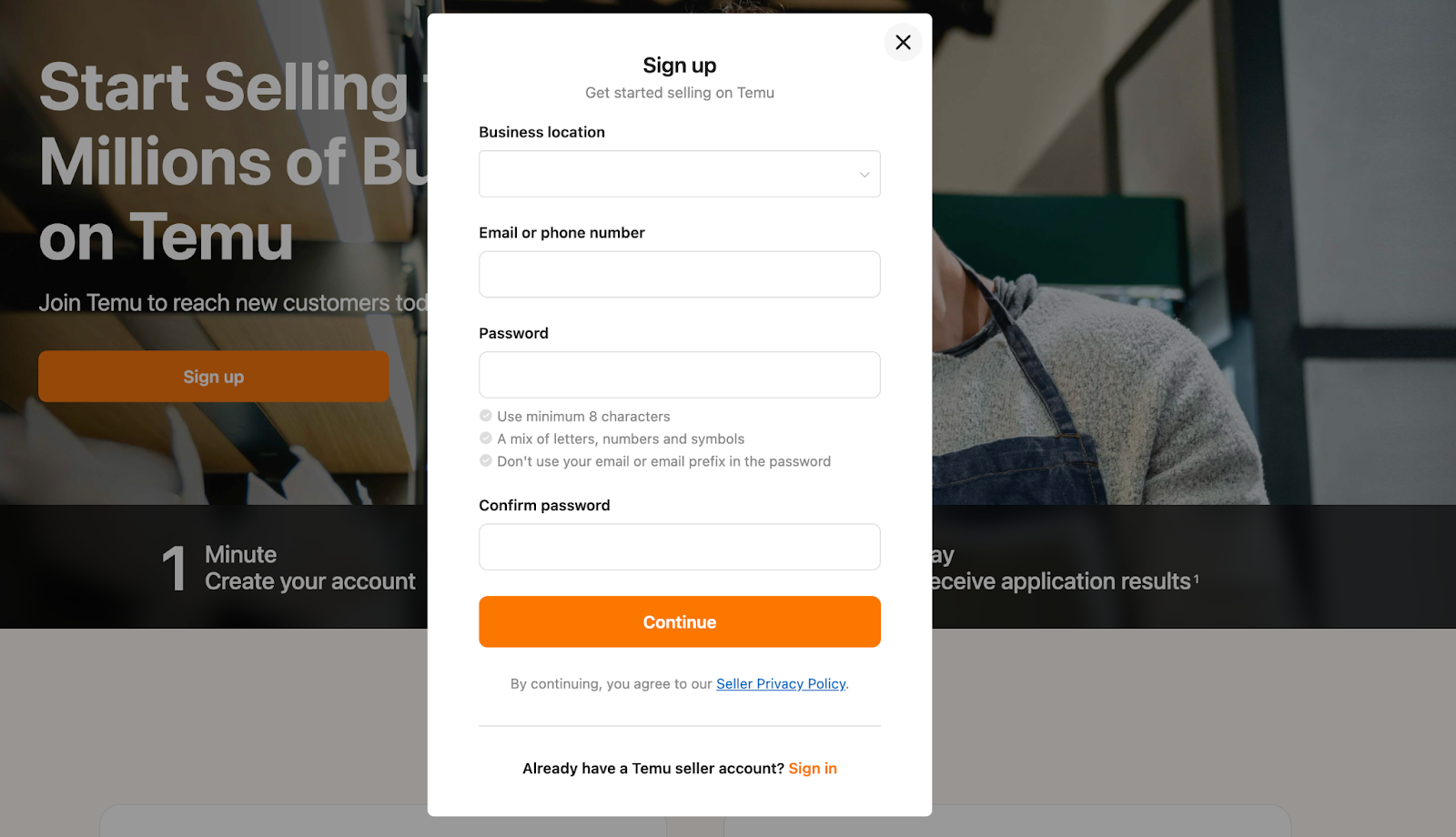
You need to create your account and register as a seller. The fastest way is to register directly through the Temu Seller Center.
If you're a U.S.-based seller, the process is now open to everyone. Temu has fully opened its marketplace to all U.S. sellers and removed the old invite-code requirement, so you can sign up directly on the U.S. seller portal without waiting for an invitation. This change came as Temu pushed to bring on more domestic sellers in 2025.
For some international sellers, you may still need an invitation, and Temu often invites potential sellers based on their business profile or product offerings. To request an invitation in those cases, you can email [email protected]. There's also a legacy route through Temu's sister company, the Chinese-based marketplace Pinduoduo, where you can download the Pinduoduo seller app or visit the website to register.
2. Send your info to become a Temu seller
On Temu you can register as an individual seller, or as a business. It's important to know that the application process for each type of seller requires different documentation.
According to the marketplace, this ensures that each seller on the platform is a reliable sales channel, ensuring safety for the consumer and increasing reliability for businesses.
For individual applicants, the information and documents required for verification to be a Temu seller are:
- Full legal name (first name, last name, and middle name if applicable)
- Citizenship
- Date of birth
- Place of birth
- Residential address
- Government-issued driver's license ID or passport
- ID expiration date
For business applicants, the information you'll need to provide to be a Temu seller are:
- Business type
- Business name
- Employer Identification Number (EIN)
- Registered business address
Additionally, you or a representative of your company, may need to provide:
- Legal name
- Citizenship of the brand's owner or representative
- Date of birth of the brand's owner or representative
- Residential address of the business or representative
- Government-issued driver's license ID or passport of the brand's owner or representative
- ID expiration date
Once your application is reviewed and accepted (Temu reports that this usually takes up to 24h) you can actually create your seller account and profile.
3. Set up your profile
Once accepted, you must complete your account with information about your business and other important details, such as:
- Business name and address
- Contact information
- Email address
- Phone number
- Billing information
- Bank details
- Tax identification number
4. List your products
Once you've got everything ready, it's time to add your product listings. It's a straightforward process where you'll need to add information such as:
- Product title and description: Use relevant keywords and add as much information as possible in your descriptions
- Product category: Choose the category that best fits your offering(s) among Temu's list
- Product images and videos: Upload high quality images of your products. You can also make short videos showcasing your items - a perfect way to provide social proof if you're selling clothing, accessories, jewelry, and similar wearable products.
- Pricing: Set prices competitively, leaving space for margins
- Product quantity (inventory): This is how many units you have for a specific product. Temu's automated platform automatically updates these numbers when you make a sale.
- Product weight and dimensions: Be precise, especially if you're selling bigger products, such as automobile parts, home decor, or furniture.
5. Manage orders
After going live, monitor your dashboard for incoming orders. Temu offers a fulfillment system similar to what Amazon does. Just keep in mind that if you choose to use Temu direct fulfillment, you'll be charged fulfillment fees based on the size and weight of your items.
6. Understand the fees
One of Temu's biggest draws for sellers is its low cost structure. Unlike some larger platforms, Temu doesn't charge listing fees or monthly subscription fees to get started. Instead, you'll typically pay a referral commission on each sale (commonly in the range of around 2% to 5%, though rates can vary by category), plus payment processing fees. If you use Temu's direct fulfillment, fulfillment fees based on item size and weight will also apply. Always check the current rates in your seller dashboard, since Temu has adjusted its fee structure as the platform evolves.
7. Get paid
Temu pays sellers through bank transfers, typically on a weekly or bi-weekly schedule after orders are confirmed and any return windows have passed. Make sure your bank details and tax identification number are correctly set up in your seller profile to avoid payment delays. Keep in mind that Temu may deduct fulfillment fees, commission, or other applicable charges from your payouts.
What is Temu?
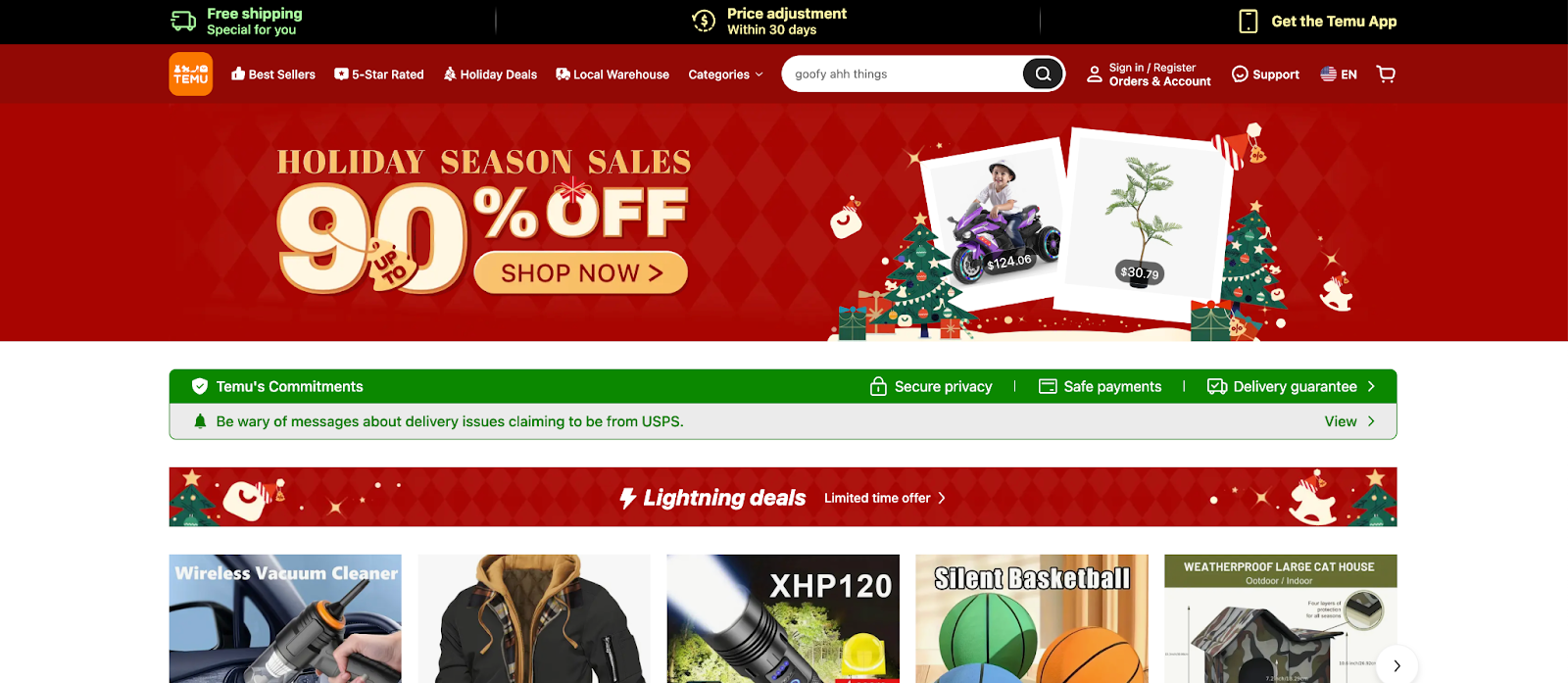
Founded in 2022 (yes, it's that new) Temu is a platform that has been gaining a lot of notoriety in recent years.
This is mainly because it offers a wide variety of products at low prices, catering primarily to budget-conscious consumers seeking deals across categories like fashion, home goods, electronics, beauty products, and more.
With more than 400 million global monthly active users on its mobile app (up from around 167 million in early 2024), the platform stands out for its competitive pricing and explosive growth. Historically, those low prices were achieved through direct-from-manufacturer sourcing and bulk purchasing that minimized middleman costs, though the way goods reach U.S. shoppers has shifted significantly (more on that below).
Let’s take a look at some of Temu’s main features:
Temu’s key features:
- Gamification shopping features:
Temu’s mobile app integrates many gamification features into the shopping experience, such as special offer roulettes and other mini-games where users can earn discount coupons to use. This feature aims to increase engagement with online shoppers.
- Personalized recommendations:
The platform tailors product recommendations based on each consumer’s previous searches, ensuring that niche-specific online stores always have the right audience accessing their product listings.
- Extensive product range:
Temu offers items across virtually every category, from clothing to gadgets, books, car parts, and even food & grocery.
- Flash sales & promotions:
Temu constantly offers discounts and time-sensitive deals encouraging a sense of urgency and making consumers act fast, reducing cart abandonment rates and increasing conversion rates for sellers.
- User-friendly interface:
Temu’s overall simple design allows everyone to access the platform with ease.
How tariffs changed Temu's model in 2025
It's important to understand a major shift that reshaped how Temu operates. For its first few years, Temu relied heavily on shipping low-value parcels directly from China to consumers, taking advantage of the U.S. "de minimis" exemption that allowed small-value imports to enter duty-free.
In 2025, that exemption ended and tariffs on Chinese goods rose sharply. In response, Temu paused much of its aggressive U.S. advertising, repriced large parts of its catalog, and pivoted toward a local fulfillment model. Instead of shipping every order individually from overseas, Temu now bulk-ships inventory into U.S. warehouses and fulfills domestic orders from there, which helps spread tariff costs across larger shipments.
For sellers, this is actually good news in some ways: it has made U.S.-based sellers with local inventory more valuable to the platform, and it's part of why Temu has worked so hard to recruit domestic sellers.
Why should I sell on Temu?
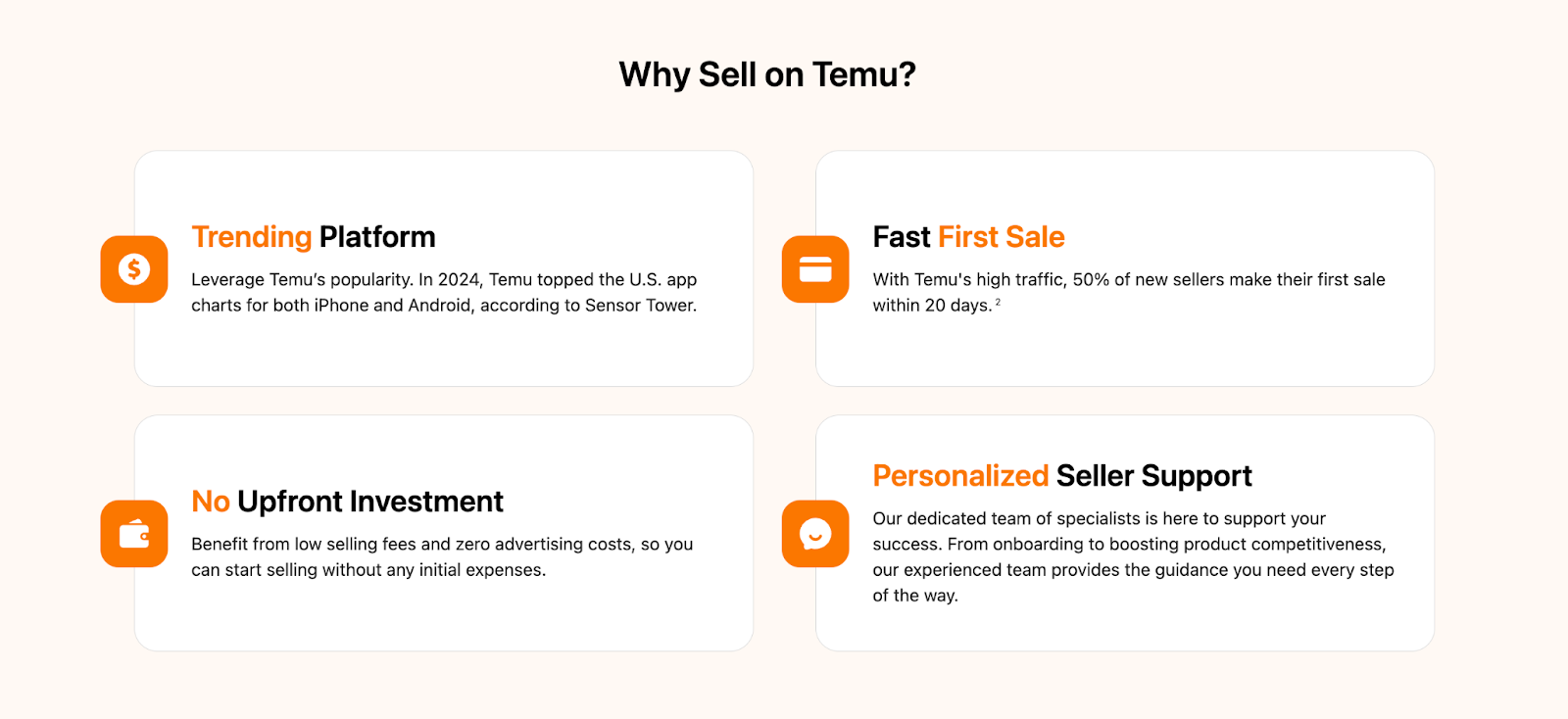
The main reason that you should sell on Temu is simply because it is so young. As a platform that has been in operation for such a short amount of time, selling on Temu offers the possibility for your business to establish itself as a big player within an ecosystem that's still evolving.
Additionally, Temu offers several benefits for your online business, such as:
Access to a massive, growing audience
Despite the young age, Temu has rapidly become one of the most-used shopping apps in the world, with its global monthly active user base growing into the hundreds of millions and attracting budget-conscious shoppers that actively seek good deals.
As Temu grows, your business can benefit from its expanding user base without having to invest heavily in marketing your own storefront. You can also be sure you're a first-mover, knowing there's considerably less competition on Temu than with the other, well-known marketplaces.
Simplified logistics
Temu provides integrated logistics solutions, including free standard shipping on all orders that meet a minimum order value.
These policies allow the platform to offer a wider variety of items, including smaller and more convenient sizes, as well as prioritize more environmentally friendly shipping methods. Following Temu's 2025 shift toward local fulfillment, U.S.-based sellers who can hold domestic inventory are especially well positioned to take advantage of faster, lower-cost shipping.
The marketplace also offers a free return for the first return of one or multiple returnable items. According to Temu's guides, the return window for most items is 90 days from the date of purchase.
Competitive pricing model
Temu built its reputation on rock-bottom prices, originally driven by a direct-to-manufacturer sourcing approach. While tariff changes have reshaped how goods reach U.S. customers, the platform is still built around helping sellers offer products at low prices while maintaining margins. It's a platform very similar to eBay in that it hosts a wide variety of categories for customers looking for a good deal.
Focus on shopping experience
Temu offers various forms of incentives like discount roulettes, coupons, free items, item-specific discounts, and limited promotions.
These elements aren't just standard deals; they gamify the shopping experience, making the customer feel rewarded just for participating in the app. It's a strategy that increases traffic, conversion rates, and profitability.
Lower barriers to entry
Selling on Temu involves minimal upfront costs compared to larger platforms, making it an attractive option for new or small businesses looking for a good place to start selling. There are no listing or subscription fees to get started, and U.S. sellers can now register directly without an invitation.
Despite that, you may need to go through a registration process that involves submitting verification documents to be accepted as a Temu seller (more about this process above).
- AliExpress vs Temu: Which is best for sourcing profitable products?
- Sites & marketplaces for selling anything online
Tips for selling on Temu
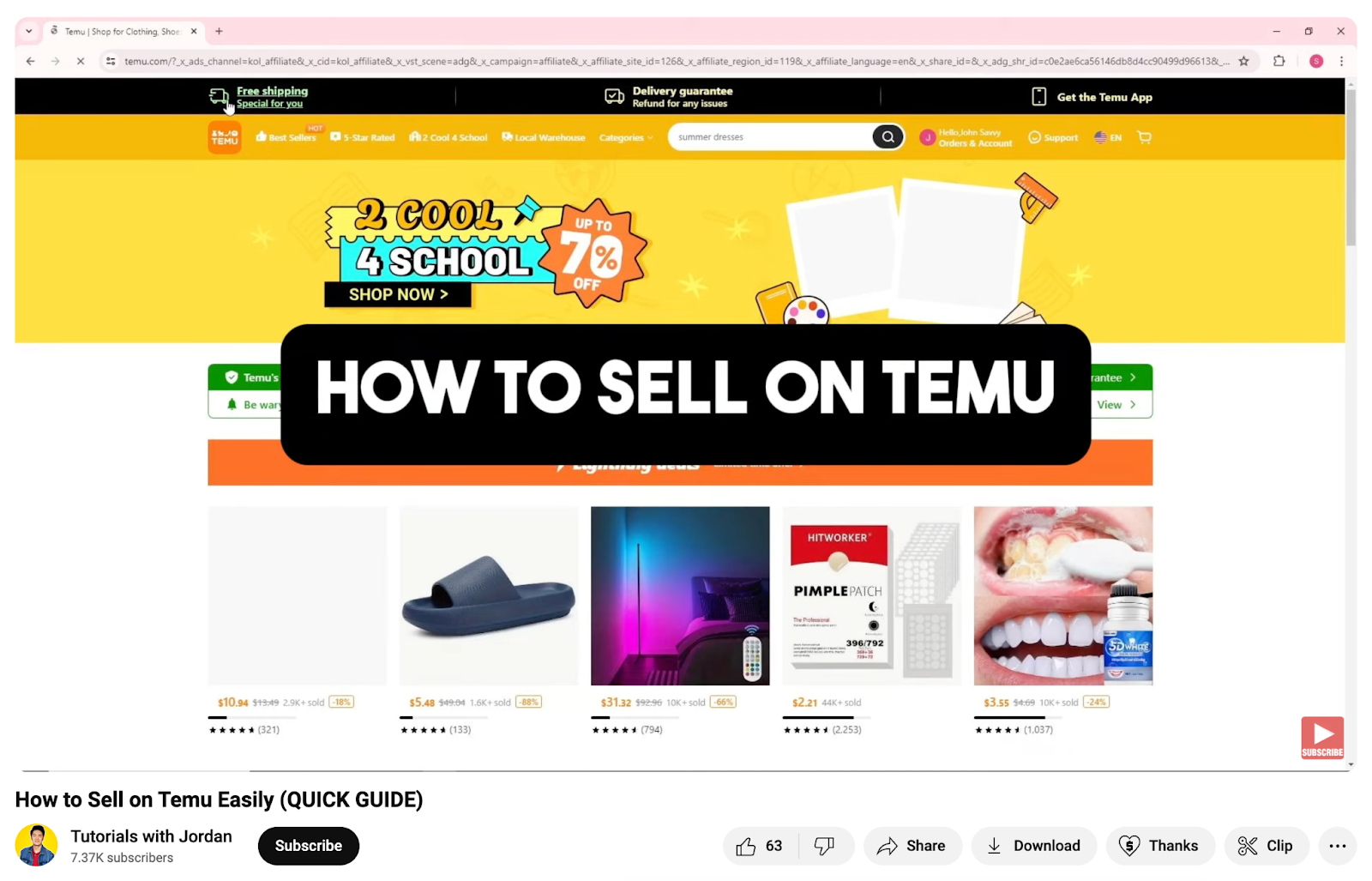
Temu is a platform focused on a more cost-conscious audience, so you have to be savvy with your offerings. Make sure to adapt your strategies in order to attract bargain hunters while offering value, either through bundles, discounts, or unique prices.
Some excellent strategies to boost sales on Temu are:
Price competitively
We mentioned earlier the need to price your items competitively. Temu is a platform that strives to stand out for its low prices, so constantly keep an eye on your competition and compare their prices, adjusting your own offers accordingly. Make sure your prices are competitive, but still profitable.
Optimize your product names and descriptions with strong keywords
Presentation is everything, and on Temu, product titles and descriptions can often be the difference between conversion or cart abandonment. Search for products similar to yours on the platform and analyze how sellers are presenting their items.
Another good strategy is to use keyword research tools, such as Ahrefs or Semrush to find the words most searched for by consumers in your own segment. This will make it much easier to find your products in Temu's search engine.
Leverage social media
Temu is a trending platform and it’s not uncommon to see ads spread all over the internet. You can take advantage of this exposure by promoting your own products listed on the platform.
Social media such as Instagram and TikTok are true organic traffic generating powerhouses. You can create accounts on these socials just to promote your Temu business. It’s a free engagement strategy that will only benefit your brand in the marketplace that’s already a big ecommerce trend.
- How to monetize TikTok: Tried-and-tested techniques
- How to get monetized on Instagram: Dozens of proven ways to make money
Is selling on Temu really worth it?
Despite its exponential growth as a sales platform, Temu is not without its controversies. Since its launch in 2022, the marketplace has come under fire for accusations ranging from forced labor to user information being leaked.
Other criticisms Temu has faced also involve its gamification system, used to offer discounts and benefits to consumers.
The model is described by some as something more akin to "rigged gambling" than a simple engagement feature because, unlike traditional retail loyalty strategies, it reportedly employs mechanisms designed to exploit urgency and trigger compulsive behaviours.
Despite everything, Temu is one of the fastest growing marketplaces in ecommerce today and this proves that, as a sales platform, Temu has enormous commercial potential. If you're an online business owner wanting to sell a large variety of items at low prices, Temu could be the platform for you.
Learn from the pros on Whop
Want to take your ecommerce game to the next level?
Whop connects you with communities that cover everything from Amazon FBA to dropshipping. Learn directly from experts, access exclusive resources, and join a network of like-minded entrepreneurs ready to support your growth.
Whether you're new to selling online or looking to scale, Whop's expert-led communities provide all the tools, courses, and strategies you need to succeed. Browse Whop's discover page and join a community that suits you!
Connect, learn, and grow with Whop today—it's the fastest way to start making bank on Temu and other platforms!
FAQs
Is it safe to sell on Temu?
Yes, selling on Temu is generally safe. The platform provides robust support for sellers, including integrated logistics, payment protection, and fraud prevention systems.
How can I become a seller on Temu?
To sell on Temu, apply through their seller portal by providing your business details and product information. Once approved, you can set up your storefront, list products, and start selling.
What types of products sell best on Temu?
High-demand, affordable items like fashion accessories, home essentials, beauty tools, and small gadgets tend to perform well on Temu. But as trends change, a good business strategy is using tools like Google Trends, or keeping an eye on social media to track current trending products to sell.