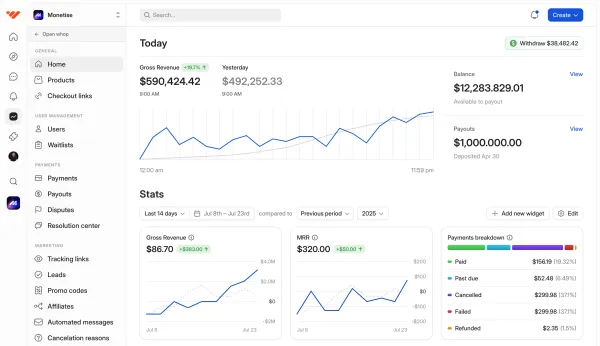
Learn how to launch a service business on Whop and transform your passion into a money-making machine with our easy-to-follow guide.
Key takeaways
- Service businesses offer low startup costs, flexible schedules, and multiple income streams without needing inventory or complex logistics.
- Creating detailed target personas helps you tailor marketing campaigns directly to your ideal customers' specific pain points and goals.
- A comprehensive business plan significantly increases your venture's viability and provides a blueprint for execution, funding, and growth.
Thinking about starting a service-based business? Smart move. Service businesses are one of the easiest (and most profitable) ways to become your own boss, with low startup costs and unlimited room to grow.
Unlike product businesses, you don’t need inventory, warehouses, or shipping. Just your skills, expertise, and the right platform to connect with clients. From coaching and design to tutoring, catering, or finance, the list of service business ideas is endless.
But before you start charging real clients, you’ll need to choose your niche, build a storefront or website, and figure out your exact offerings.
That’s exactly what this guide covers: step-by-step strategies to start, market, and scale your service business in 2025.
What is a service-based business, and why should I start one?
First, let's get clear on what a service-based business really is:
Service-based businesses provide services (online or in person) directly to clients. A basic way to think about it: instead of selling the cleaning supplies, you're selling cleaning.
Or, instead of selling a SaaS, you're selling the outcome that software delivers. Things like lead generation, automation, reporting, or growth; using tools behind the scenes to get there.
That’s the key difference: product-based businesses sell things, while service-based businesses sell results, time, or expertise.
And that’s why service businesses are often easier to start. You don’t need to build anything from scratch, you just need a skill that solves a clear problem for someone else.
Here’s a few other reasons starting a service business is one of the smartest moves you can make:
- Low overhead costs: Because you’re selling your time and expertise instead of physical goods, expenses stay lean. Forget inventory, shipping, or supply chains. Most service businesses only need basic tools, software, and the right platform to get clients and start making money.
- Flexible hours & location: No more clocking into a 9–5. As a service-based entrepreneur, you decide when, where, and how you work. Whether you’re freelancing part-time or scaling into a full agency, you have total control over your schedule and lifestyle.
- Solid brand recognition: Great service gets noticed. Delivering consistent results builds trust, loyalty, and word-of-mouth referrals. That means it’s easier to become “the go-to expert” in your niche without needing a massive marketing budget.
- Multiple income streams: Service businesses are easy to diversify. You can package services into tiered plans (basic, premium, VIP), add complementary offers (like a trainer teaming up with a nutritionist), or even branch into digital products and passive income streams.
How to start a service-based business
No matter what industry you want to break into, there are some basics you’ll need to know to launch a service-based business.
From creating your business plan to developing an online presence, here are the key things to consider to give yourself the best possible chance of success.
1. Refine your business idea

There are a lot of service-based business ideas out there, but not all of them have real demand. The goal is to find where your idea actually fits in the market.
Start by talking to people who match your ideal customer. Friends, coworkers, online communities, anyone who fits the profile. You’re trying to understand what they actually need, not what you think they need.
This is where a target persona comes in. It’s a simple profile that represents your ideal customer, built from real insights about their habits, goals, and pain points.
For example, if you’re starting a home organisation business, your persona might look like this:
Sue is 35, works freelance, lives alone in a small apartment, and feels overwhelmed by clutter. She wants a more minimal space but doesn’t know where to start. What she really needs is hands-on help, someone to guide her through decluttering and decision-making, Marie-Kondo style.
Once you have one clear persona, it becomes way easier to spot patterns, refine your offer, and market your service in a way that actually resonates.
2. Create a business plan
Your first business plan doesn’t need to be overly complex, but it should cover the essentials. It’s your blueprint, outlining what you’re offering, how it works, and how it will make money.
At minimum, include:
- What your business does (your service)
- Who it’s for (your target audience)
- How you’ll get clients (marketing + sales)
- How you’ll deliver the service (operations)
- How it will make money (pricing + costs)
It might feel like overkill early on, but having this clarity makes everything else easier.
3. Register your business

This is one of the more admin-heavy steps, but it matters.
Registering your business makes things official. It builds credibility, keeps you compliant, and allows you to do things like open business bank accounts or apply for funding.
The exact process depends on where you live, so make sure you check local requirements. If you’re unsure, it’s worth speaking to a professional to avoid issues later.
If you fail to register your business, this can lead to several problems further down the road, including penalties.
4. Sort out finances
Though some service businesses can be bootstrapped with little to no startup cash, this isn’t always the case.
Even though service businesses are relatively low-cost to start, you might still need some upfront investment.
Think about what you actually need to operate (tools, software, equipment, insurance, etc.) These are sunk costs, so factor them into your starting budget.
You’ll also need to decide how you’re going to price your services. Common options include:
- Hourly rate: One of the most widely used forms of pricing, this is a business model where you charge your clients based on the amount of time you’ve spent working on a project.
- Package pricing: Similar to charging a flat fee, this option lets you bundle two or more complementary services together.
- Value-based pricing: This is when a company determines the pricing of a product or service by accounting for their customer's perception of its value, rather than exclusively focusing on production costs or the prices set by competitors.
Initially, you might set out introductory costs that are generally lower than average when first starting out, then gradually increase prices as your reputation builds.
Bear in mind this price point isn’t set in stone. You can test the waters to see how customers respond, then adjust accordingly.
- How much does it cost to start a business?
- What is zero-based budgeting & why is it important for business owners?
5. Develop your skills

You’re not the only one with your idea, BTW. This means your edge comes down to execution.
The better your skills, the easier it is to stand out, deliver results, and retain clients. That includes both your core service and things like marketing, sales, and client management.
Educating yourself on business management and strategy can teach you how to market services effectively and understand customer behavior. Learning about things like digital marketing, social media strategies, and customer retention can help you make more informed decisions that drive growth.
The business world is constantly evolving, which means taking a course can make you aware of new trends, technologies, and best practices within the service industry, helping you to adapt and gain an edge over your competitors.
Find the top online business courses on Whop and learn how you can build your first business.
6. Spread the word
Once you’re ready, you need people to actually know you exist.
Some of the most effective ways to get clients:
📧 Email marketing: Email marketing can help build awareness around your brand, and maintain awareness through scheduled reminders. You can create customized email marketing campaigns and newsletters to drive traffic to your website or social media pages. As you attract more clients, you'll expand your email list, building a growing base of loyal customers.
🗣️ Word of mouth: The most traditional way to build a returning customer base, word of mouth focuses on delivering exceptional services and actively encouraging testimonials online. Be sure to ask your clients to leave a detailed review, sharing their positive experiences with future customers and acting as brand advocates.
🖥️ Social media: Social media is one of the top ways to market your services online. Find out which social media channels your target audience engages with the most, whether that’s Facebook, Instagram, TikTok, or LinkedIn.
Focus on the platforms your audience already uses, and create content that’s useful or relevant to them.
7. Collect regular feedback
The key to any successful business or service is the ability to process constructive feedback from customers.
You should always aim to provide excellent customer service and support, prioritizing your relationships with your clients.
Fraser has worked in the service industry for over 10 years, and he says that the most important aspect of any service business is the customers:
Making sure my customers can always reach me has been the key to my growth. When clients feel heard and supported, they not only come back but also refer me to others — and that’s how a service business really scales.
How to start your own service business with Whop
Now we’ve covered the essentials of developing your service business, it’s time to discuss the final step: launching your service online.
Below, you’ll find a quick step-by-step guide on how to make money online with your service-based business and Whop.
1. Create your offer
You can create a whop for any kind of business. For the sake of this walkthrough, let's say that you run an AI agency offering digital services. Choose 'Agency services' and you will then be directed to the 'agency' screen.
After selecting 'AI Agency' for your service business, you'll be asked to fill out some more information like your business name and location.
3. Set up your business on Whop
Now that your whop is ready, let's set it up.
First, add some products. For our AI agency we are going to add three products: a custom AI-driven SEO report, AI content creation, and AI-powered lead generation.
Add products
Start by clicking 'products' from the left-hand side bar, then click the 'create product' button.
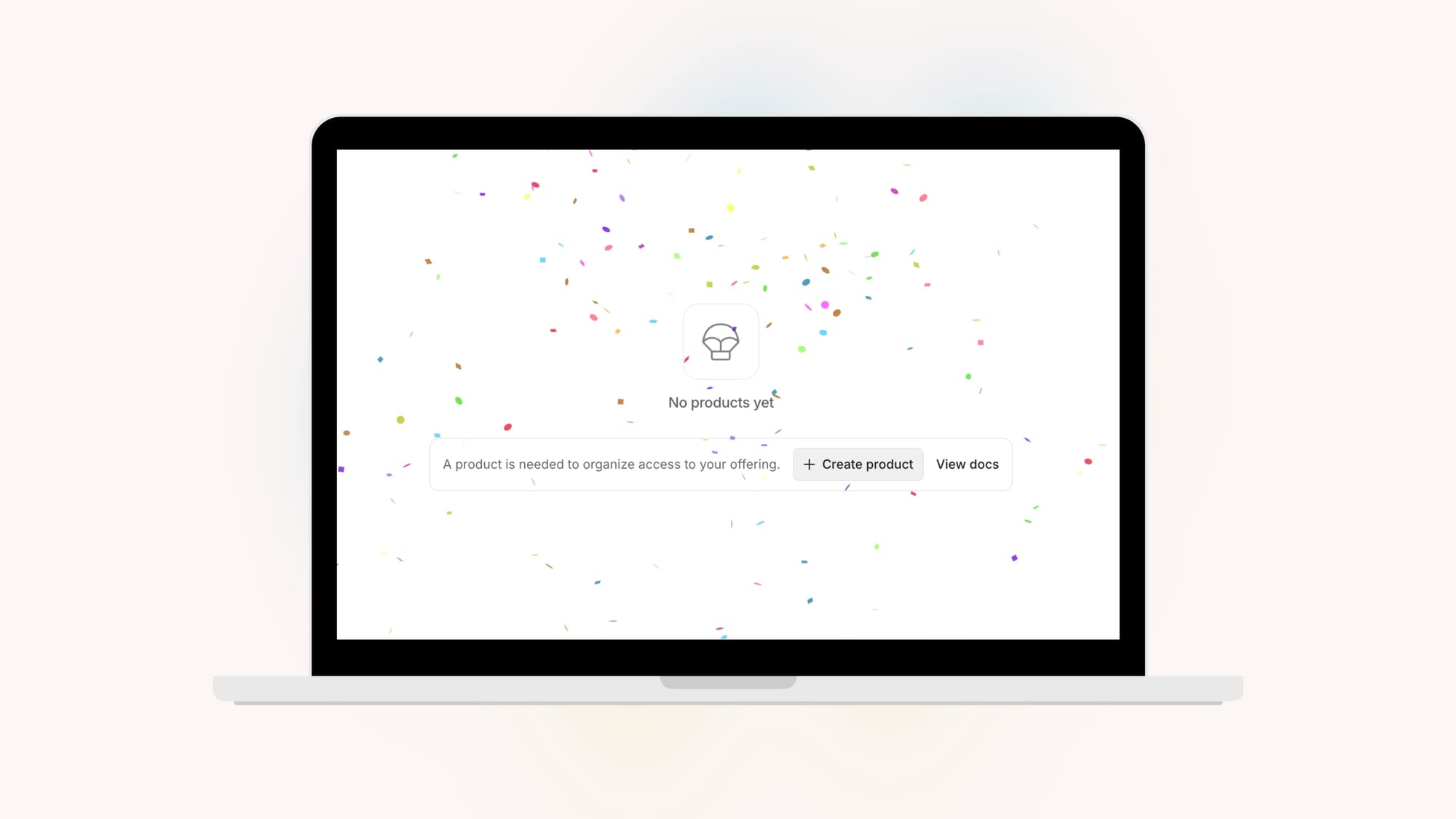
With Whop's live storefront editor you can see how your product will look as you are creating it.
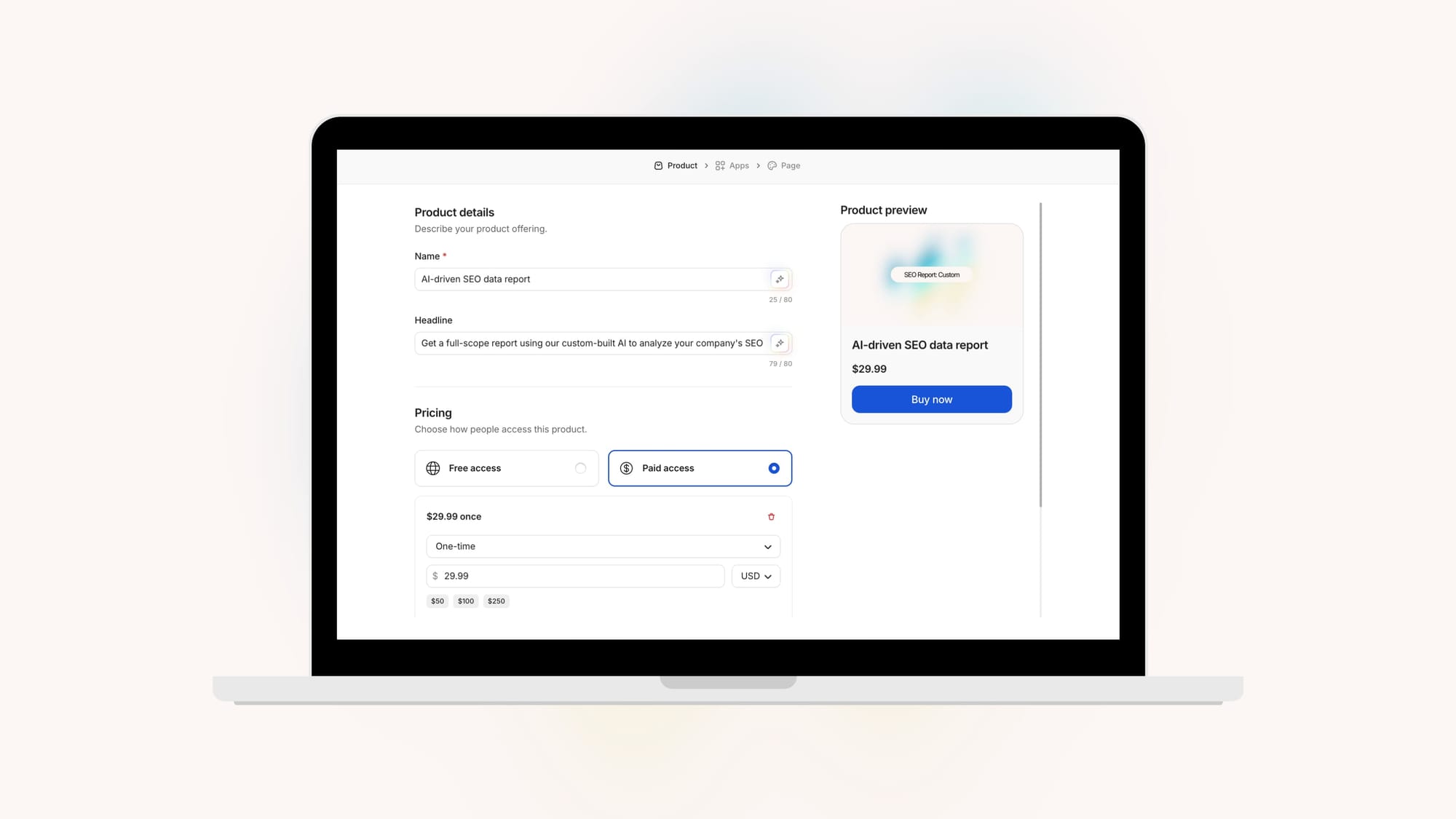
For each product you can create:
- Title
- Headline
- Pricing
- Payment methods
- Features
- Description
- Images
4. Add apps to your whop
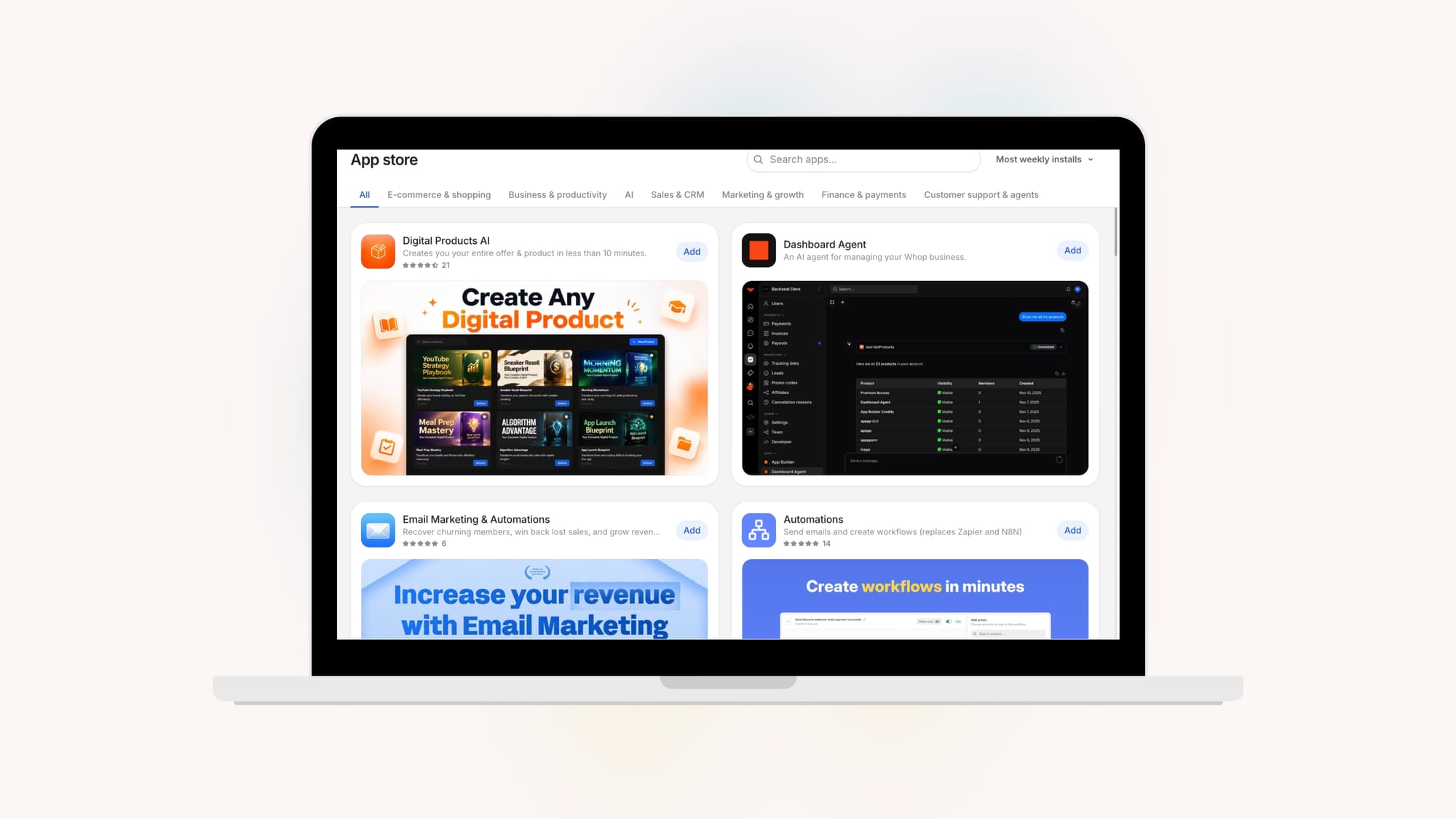
You can also add Whop apps for your customer to use.
For example, you can add the announcements app and keep customers informed of any sales or discounts, new offers, or industry info. You can add the events app to run webinars (free or paid), and automation apps to complete repetitive tasks like follow-ups, onboarding emails, and client workflows.
5. The finer details
That's it! Now you have a whop built for your AI agency services. You can sell multiple services, accept payments, and chat with your clients.
Don't forget to make sure that your profile is ready for payouts (by verifying your account) and that your business page is complete.
What kind of services can you sell on Whop?
With Whop you can sell almost any kind of service - as long as it meets our terms and conditions.
Here are a few examples of what you can sell with Whop. All of the following examples are real service-based whops.
AI services
I used AI agency services as my example above because they're growing rapidly in both popularity and profit. 88% of organizations use AI in at least one business function (a 10% increase since 2024).
That demand creates a huge opportunity. Businesses know they need AI but they often don’t know how to implement it. That’s where agency services come in.
Instead of building AI software, you’re helping clients actually use it to generate leads, automate workflows, and drive real results.
Our marketing director, Brett, put together a full course to building out AI-services right here on Whop – check it out.
Coaching services

Coaching is one of the easiest services to sell. While you do have to have existing knowledge of the coaching niche you're going into, all you need is a computer and a camera. You can sell coaching service in any realm that you like - from life coaching, to business coaching, and even dating coaching services.
To create your coaching service on whop, simply create your whop, add the video calls app for live calls, the chat app for conversation, and the calendar app to book one-on-one private sessions.
Fitness and nutrition services
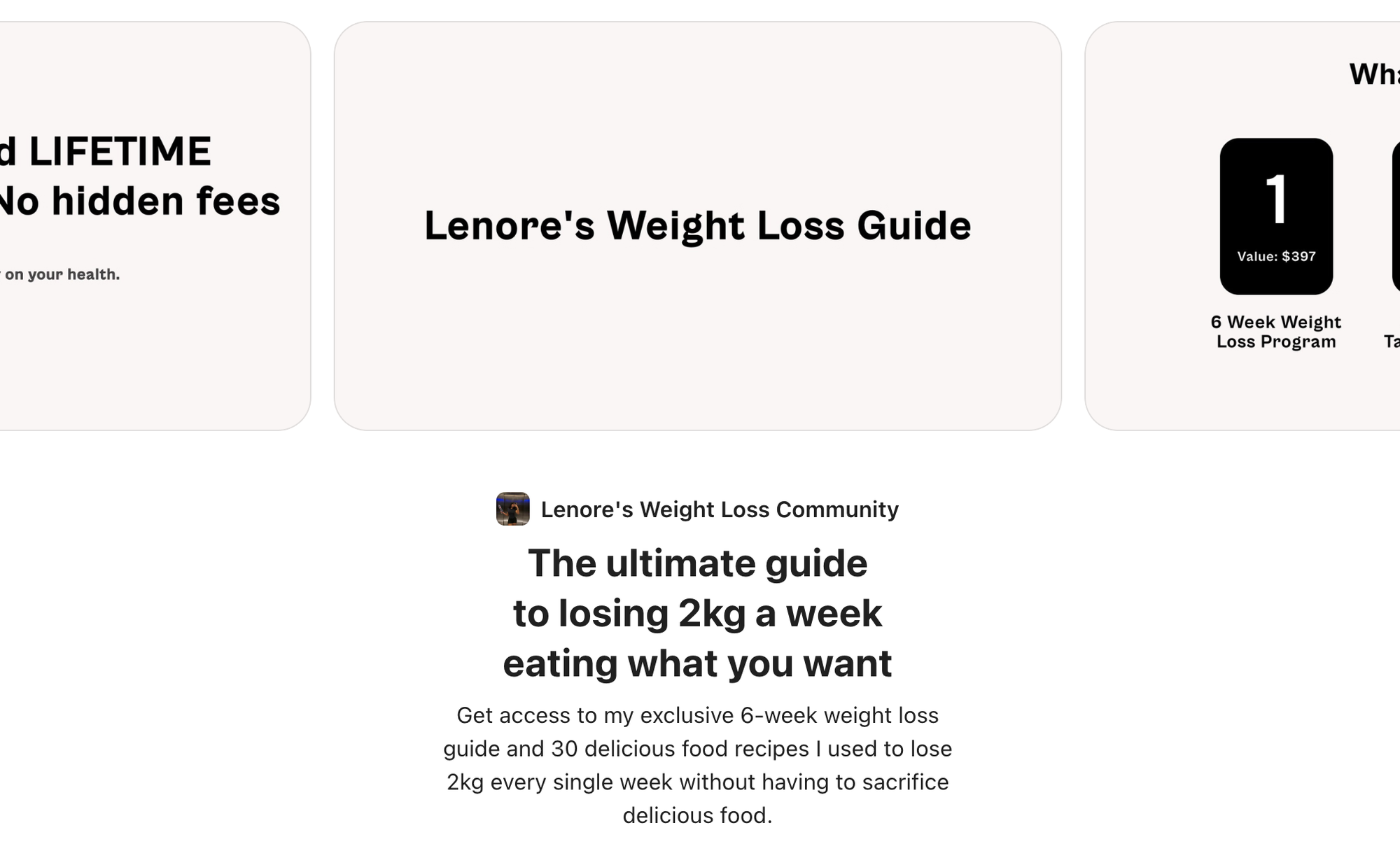
Avid cook or fitness fanatic? Then you can start a service business selling recipes, meal plans, workout routines, or all three.
To sell fitness or nutrition services with Whop you must create your whop, add the files app to share any digital recipes or guidebooks, the courses app to share any self-led education, and the chat app for conversation.
Sports betting advice

Whop is home to over a thousand sports picks whops. If you love sports betting then you can sell your expertise in a paid community.
All you have to do is create your whop, add the apps you need (forums for sharing picks, chat for community conversation, course for sports betting education) and start getting paid for your sports picks service.
Marketing services
Now the first three services we have looked at focus on sharing your advice, whether that's betting advice, fitness advice, or coaching. This option is more about selling a skill.
You can sell your marketing services with Whop. How you create your whop is up to you - you may want to use the files app to share deliverables and the video calls app for client calls. And don't forget to share a portfolio.
This option also relates closely to other creative services you can sell with Whop, like writing services and graphic design services.
Tutoring services
This one's for the nerds - tutoring services. While you can do this in-person, it's much easier to start an online tutoring service. By tutoring online you don't have to pay for fuel to travel to student's houses, consumables like pens and workbooks, or third-party insurance.
Instead you create your whop, add the video calls app for tutor sessions, the courses app to share educational content, and the files app to share worksheets.
Physical services
While Whop is a digital platform you can still use it to book physical services. Think of your whop as the landing hub of your business. With the forums app, files app, and calendar app, customers can come to your whop to view your business, save any documentation, and book in a service with you.
Start a service-based business today with Whop
Launching a service-based business can feel challenging, but it doesn’t have to be overwhelming.
You’ve learned the steps, now you just need the right setup to actually run it.
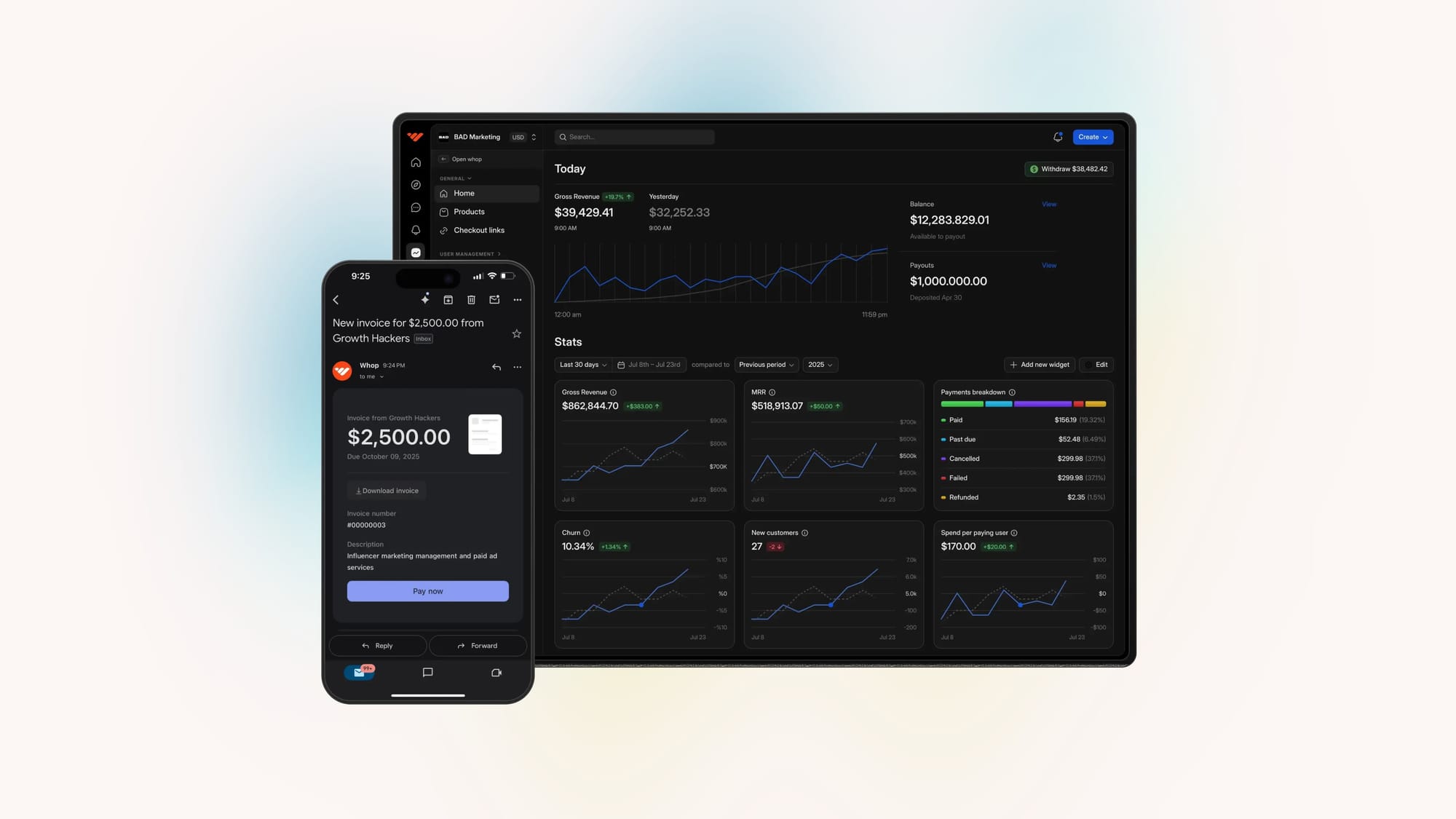
Businesses on Whop get access to everything you need to build, run, and scale in one place. Create and send invoices, set up subscriptions and retainers, manage client communication, and handle contracts all from a single dashboard.
Payments, billing, and even sales tax are handled for you, so you can focus on delivering the service instead of chasing admin. From one-off services to ongoing packages, Whop makes it easy to get paid, stay organized, and scale.
Start building your Whop and turn your service skills into a profitable business.
FAQ
How do I choose the right target audience for my service business?
It can be super tricky to figure out who your main target audience is, especially if you haven’t done any market research beforehand.
The best way to determine your primary audience is by asking – who will benefit the most from the service I have to offer? Who has the most money to spend on my services?
You might need to consider if there are any standing in the way of you and your target audience. For example, they simply don’t know it exists yet.
Bear in mind, however, that target audiences don’t always need to rely on demographics. Sometimes it’s more efficient to find out where people hang out online or which social media platforms they frequent the most.
How do I price my service business appropriately?
To price your business’s services appropriately, you need to weigh up what it takes to remain competitive while still driving a profit.
To determine the most realistic rate of pay for business expenses, some key questions you’ll need to assess include:
- How much are my competitors charging?
- What is the going rate in my local area?
- If I charge less than other competitors, will I still be able to make a profit?
- If I charge more, will I still be able to compete?
How do I choose a name for my service-based business?
Choosing a name for your business is a huge step, as it plays a huge role in how future clients view your brand. You want to make sure it’s clear, memorable, and unique.
Make sure the name provides an idea of what services you have to offer, for example, a cleaning business might be called ‘Dust Busters,’ ‘The Cleaning Crew,’ or ‘Tidy Touch.’
Avoid names that seem too generic, or that you’ve heard multiple times before. This will help you stand out from the crowd, and avoid your business getting mixed up with another offering similar services.
Finally, make sure your business name is easy to pronounce, spell, and remember so that it's easy for future clients to find you and refer you to others.
Which service business is most profitable?
There are a wealth of service-based businesses out there generating large profits. Some of the most popular sectors include:
- Fitness coaching.
- Event planning.
- Technology services and software development.
- Home cleaning services.
- Real estate.
- Digital marketing.
- Ecommerce.
- Consulting.
What is the easiest service business to start?
The easy service-based businesses to start are those where you are the sole proprietor and you’re working from home. When you start adding physical locations and additional employees, this starts to build additional expenses.
What is the hardest thing to overcome when starting a business?
One of the biggest challenges to overcome when starting a new business is securing business investors and financing sources. Not every business needs an immediate, intravenous supply of cash to get started, but you need to ensure you have enough to keep it running in the long term.
What is the biggest disadvantage of a service-based business vs product-based business?
The main disadvantage of service-based businesses is that they can be labor-intensive and scale more slowly, depending on the availability and expertise of personnel.
In contrast, a product-based business is usually faster to scale as a result of manufacturing and distribution. Despite this, the inventory management and upfront product investments of product-based businesses can be a significant disadvantage.