Digital products have transformed the worldwide economy – but what exactly are they? Find out with our simple definition and examples.
Key takeaways
- Digital products eliminate inventory management, production costs, and shipping logistics that physical products require.
- Anyone with a marketable skill can create digital products with low startup costs and unlimited scalability.
- Digital products provide global reach without borders, perpetual stock, and the flexibility to update or fix issues instantly.
Entrepreneurs have sold products online since the early days of the internet. Online marketplaces have become the norm, offering anything a buyer might want in just a few clicks.
This has also opened new avenues for sellers, who can upload and distribute a range of digital products without much risk. But which products are defined as digital? How do they differ from physical products?
Read on for a complete breakdown of digital products and how you can sell them online.
What are digital products?
Digital products are classified as intangible goods. These could include eBooks, artwork, software, online courses, video games, or music. In short, they are anything that exists in a digital format. Digital products are usually delivered to customers via download or email.
"Thousands of people are earning $10,000 a month selling digital products, and there's never been a better time to launch your own.
Traditional education in colleges are losing billions and that money has to flow somewhere. It's flowing directly in the pockets of people who sell digital products."
-Brett Malinowski from Whop
As the world becomes more digital, these products have become common goods. It is estimated that over the last 2 years, digital product transactions have increased by almost 70%. Data from 2025 shows that digital products created more than $2.5 trillion in value per year, and now, in 2026, that number will most likely be even higher.
This upward trend is an example of how important digital goods have become in the global economy.
Physical vs digital products: what's the difference?
While digital products are intangible goods that you sell online, physical products are tangible goods that you can sell online or in person.
A key difference between the two comes down to stock and distribution. Digital products can be created and distributed over and over again without having to wait for new inventory or figure out the logistics of fulfillment. Meanwhile, physical products need to constantly be produced or sourced to replenish inventory, in addition to maintaining packing and shipping, in order for a business to run smoothly.
Here are some examples of physical goods and their digital counterparts:
| Physical Product | Digital Product |
|---|---|
| Book | Ebook |
| Seminar | Webinar |
| Clothing | Virtual Skins |
| Printed newsletter | Digital newsletter |
| Board Games | Video games |
Digital products types and examples
The above table outlines just a few of the different types of digital products that you can sell. Here, we expand on some of the above categories and explore even more types of digital products that you can create, with examples of each.
1. Ebooks
When you're thinking of ebooks, you're probably thinking of novels in Kindle format. But ebooks are actually a thriving market, and this is true regardless of whether you write fiction or share your knowledge with an audience.
You can write short novellas, guides, whitepapers, biographies, or anything else that comes to mind. No need to get publishers involved; just publish your ebooks on Whop or Amazon.

Like most digital products, ebooks work best when they're part of a larger product. For example, they're an added bonus to an online community. However, you can make good money selling ebooks if writing and selling them is quite literally all you do.
"When it came to writing my books, and just writing in general, the hardest thing about it is just picking what you want to include in the book and what you want to get rid of."
-Jeremie Lander from Better Finance Today LLC
You can even monetize this very quickly by using AI to write your ebook. Doing this lets you go with quantity over quality, potentially earning less per book, but putting in minimal effort. In the end, the money adds up either way. Ebooks are also a great source of passive incomeSoldier.
Example:
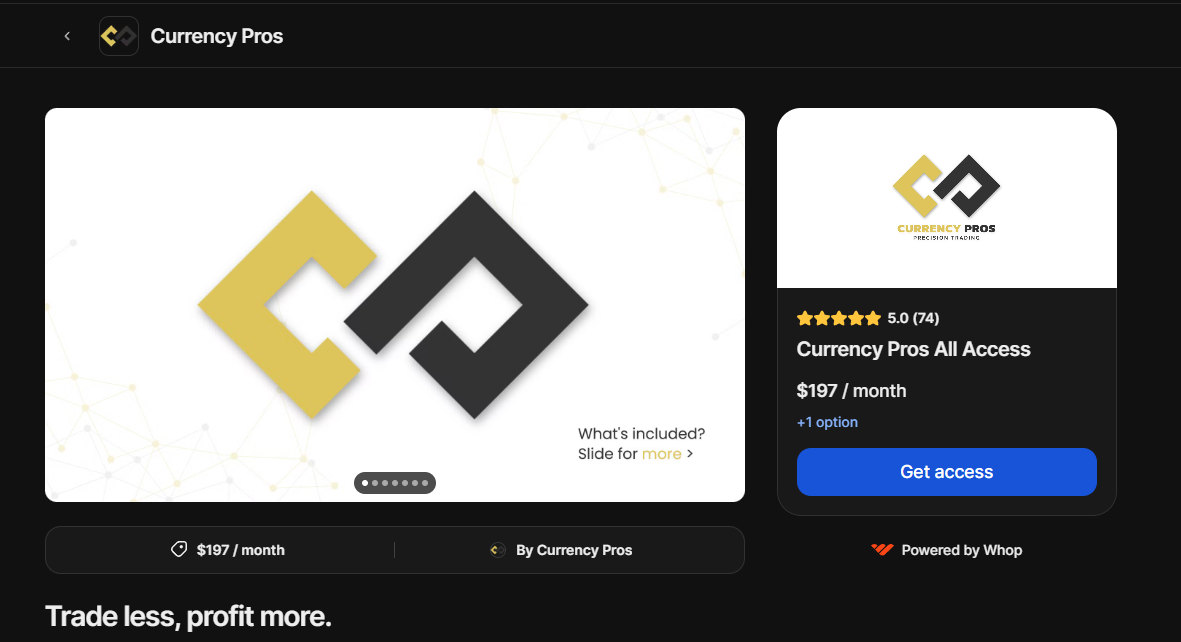
Currency Pros All Access provides a huge collection of trading tools and education. Subscribing gives users the chance to get automated trading tools, an AI trading assistant, and strategy ebooks.
This is a good example of building a digital product that works across many different venues: they've got several products all bundled into one subscription fee.
2. Software
Tim Konieczny from Rapidemo
Software is a broad category, spanning multiple creative disciplines. Software might include development or creative tools for industries like gaming, music production, art, writing, and more.
"I think that SaaS is a great way to make money online. Unlike physical products, SaaS businesses scale without needing to invest in infrastructure."
-Tim Konieczny from Rapidemo
The SaaS industry, known as "Software as a Service," has undergone incredible growth in recent years, and popular SaaS products include MailChimp, Gmail, Slack, and Dropbox.
If you are technologically minded, then SaaS is a great digital product to create and sell. And if you're not, AI chatbots like Claude can help you get started.
Example:

WAAS Mastery 2.0 is a step-by-step program that teaches users how to build AI-powered websites. Those websites can then be sold as a software product.
But this isn't the only way to make money with SaaS: you can also sell apps, website development, and more.
3. Online courses
Online courses have become increasingly popular over the last ten years. These digital learning platforms and spaces allow people from all over the world to learn new skills and knowledge without leaving the comfort of their homes.
Today, you can find online courses on everything from how to learn to play the guitar, to extensive business courses. As a creator, if you have education or a skillset that you can share with others, then you can easily create an online course to sell.
Some of the most popular course niches include trading, finance, crypto, fitness, and self-development.
The key to selling a successful course is to use a platform that actually helps your students complete it, such as Whop.
Example:

PJ Tradesfor is another example of stacking digital products for even greater success. The offer comes with community access, an online course, real-time coaching, and exclusive insights.
4. Online communities
The easiest way to make money via digital products is to build yourself an audience that wants to buy them. That's where online communities come in.
Online communities are a way for a creator of any kind to bring together their audience or customers and create a branded, helpful, and, most importantly, exclusive group.
"Only make content that you would watch, because organic content is needed more than ever now."
-Whop creator
Online communities can take whatever form you like. It can be as simple as a beauty influencer creating a paid forum for their community to share product tips and reviews, or as in-depth as an online trader creating a paid community that involves a forum for advice, chat for engagement, and weekly group video calls for extra education and advice.
These communities are sometimes hosted on their own websites, but they thrive when they're hosted on platforms that support them, like Discord, Telegram, WhatsApp, or Whop. Whop also has Discord and Telegram integration, so moving an existing community over to Whop to monetize it is a breeze.
Example:

Market Fluidity University combines a lot of the things that make a good digital product. Hosted by a trading expert, the community Discord server offers bi-weekly group 1-on-1 simulation sessions, daily livestreams, market updates, and more.
Build an online community that makes you money with Whop
5. Podcasts
Podcasting is a format that has grown at the same time as digital products became widely available.
Most podcasters provide two options for their content: download or streaming. You’ll find podcasts online that can be downloaded for free (usually monetized with ads) or sold as a one-off payment or as part of a wider subscription model.
There are so many different ways that you can monetize a podcast, from subscriptions to affiliate marketing, to merch, communities, and more.
Example:
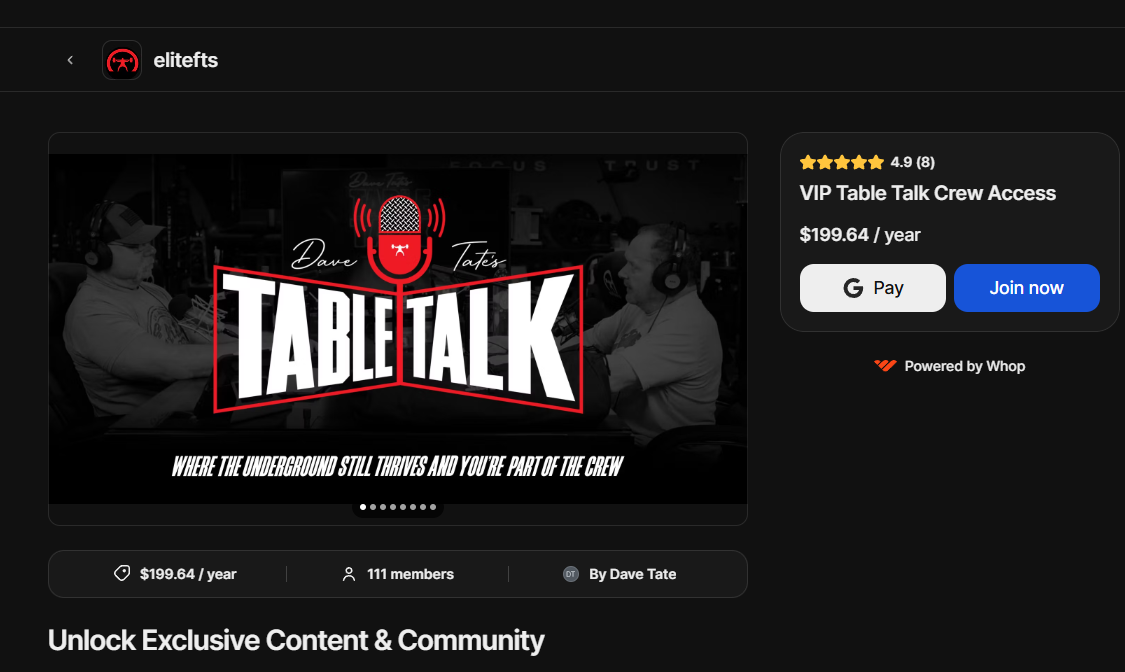
Table Talk uses Whop to monetize their podcast in additional ways. Members get access to exclusive podcasts, community, and training resources.
6. Subscriptions
Subscriptions sit at the very foundation of many successful digital products. In this case, you're being paid on a monthly basis for access to something valuable. Deciding what that means will be up to you.
A lot (or all) of the products on this list can be successfully sold on a subscription basis. In fact, bundling digital products is a sure-fire way to improve your revenue.
Your subscription can cover digital products like:
- Online courses
- Ebooks
- Apps
- Tutorials
- Digital planners
- 1:1 coaching
- Live streams
- Videos
- Podcasts
- And more
The good thing about using a subscription model is that you can count on recurring income, and it's also easier to stomach for people who may not be prepared to pay for your entire product upfront. Plus, you can decide on different pricing tiers to make it more approachable.
Example:
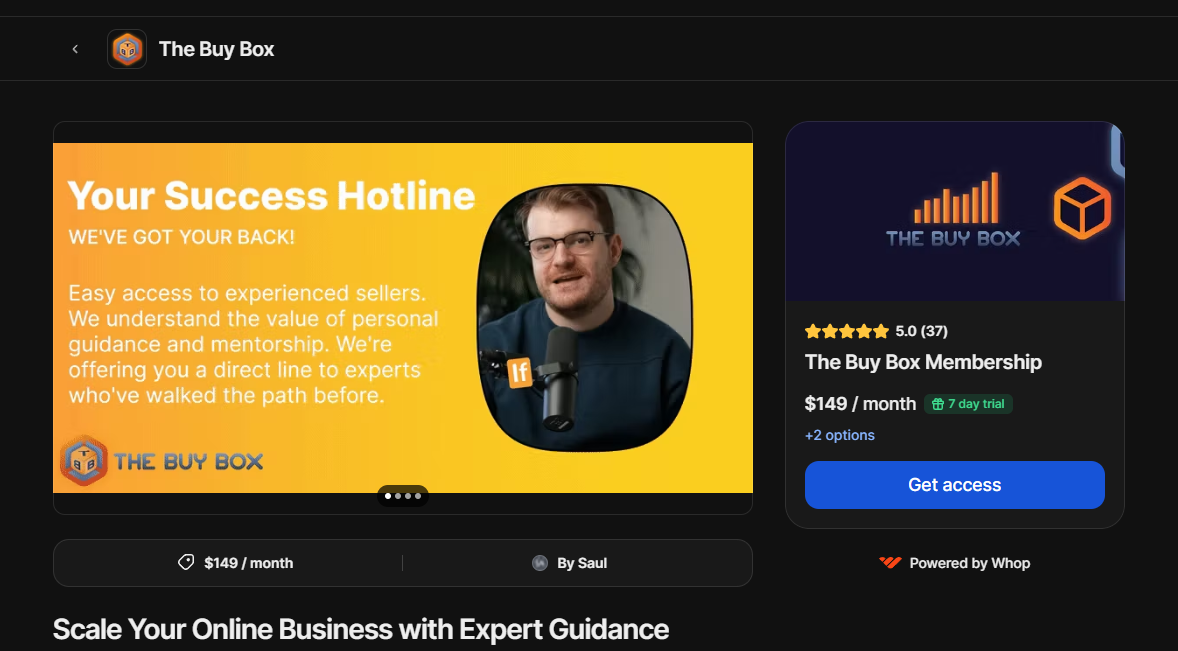
The Buy Box runs on a subscription basis, with members being able to choose between $149/month, $380/3 months, and $1,350/year. This includes a 1:1 onboarding call, access to an online community, alerts, tools, and more.
7. Music
Just like with reading, digital products have transformed the way people listen to music. With platforms such as Spotify and Apple Music, it’s more common for people to stream music than to own it. This means that for a creator looking to put their music out into the world, digital should be their first port of call.
Example:
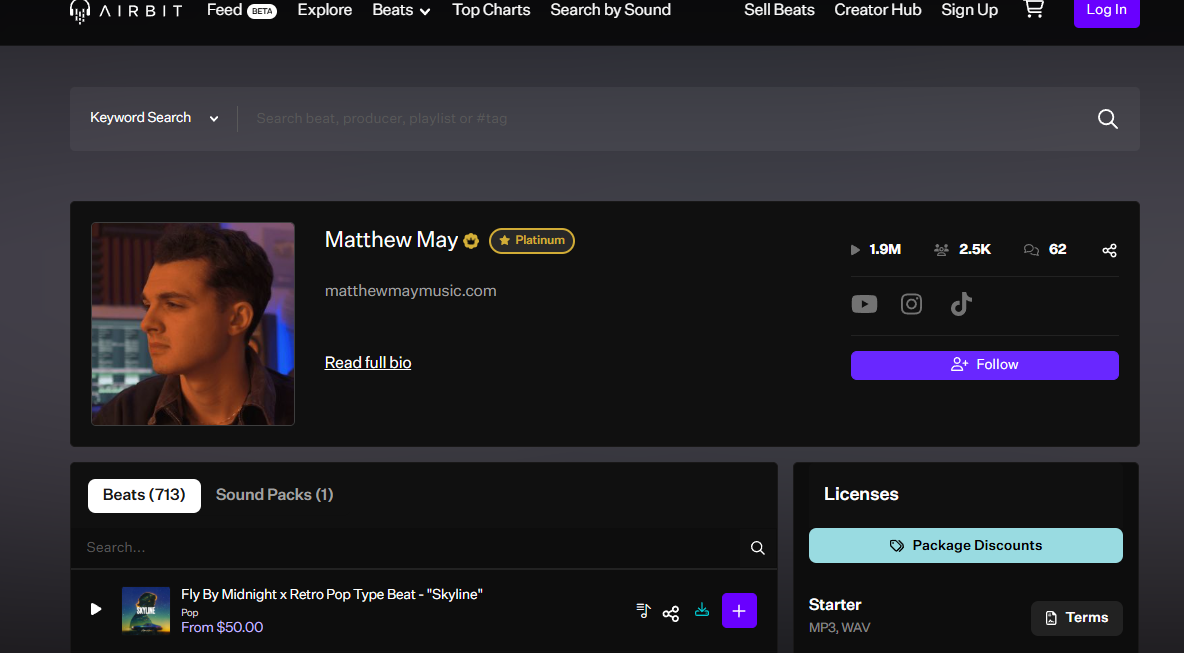
Matthew May sells music beats on Airbit, with licenses for both exclusive and non-exclusive rights.
8. Video games
Another common type of digital product is video games. All gaming consoles can download and store games independently of discs or cartridges. Digital downloads are a popular option for gamers and the only option for many live service games that function online.
Though it was previously a very competitive market to break into, indie developers can now create and sell their own games online, either through their own site or on a popular gaming platform like Steam.
Example:
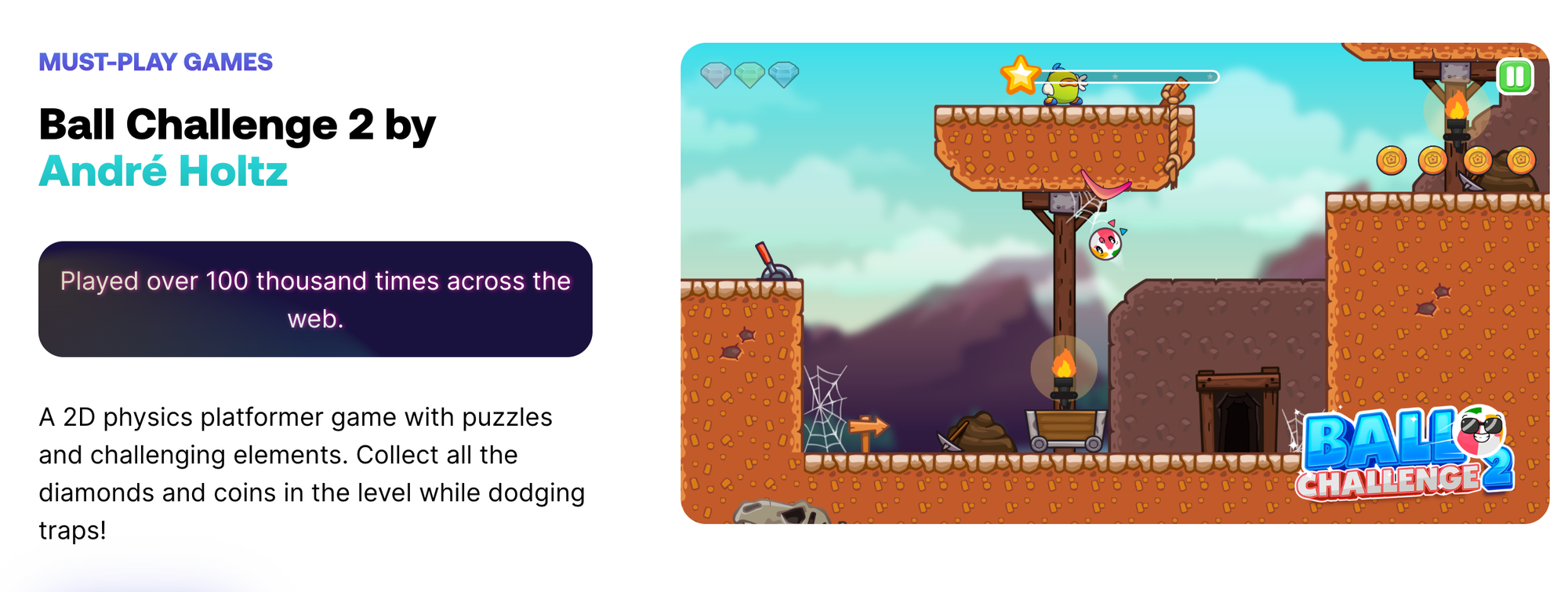
Game developers can publish on Steam for a $100 fee. Once they make over $1,000 in revenue, that fee is then returned to the seller. Steam takes a 30% cut of revenue, as it acts as a marketplace for people seeking new games to play.
The advantages of selling digital products over physical goods
By now, you know that digital products come in many different forms and have a wide variety of uses, but you may still be wondering why you should sell digital products instead of physical goods. Why sell an ebook instead of a hardback, or host a course online instead of in-person?
Let's take a look at the advantages of selling digital products:
Low barrier to entry
Whether you have skills in design, creative writing, photography, trading, betting, education, or anything else, you have what it takes to create a digital product. It doesn't matter whether you are selling an ebook about quantum physics or a video lesson about artisanal soapmaking; if you have an idea or a skill, you can turn it into a digital product.
This is very different to selling a physical product. If you wanted to sell a printed book, you have to know your way around the publishing industry and how to get stocked in brick-and-mortar stores. If you put the same information in ebook format you simply write, upload, and distribute online. This leads us to...
Low overheads
How much does it cost to write, print, bind, publish, and distribute a physical book? What about the cost to hire a venue space and kit it out with refreshments for your seminar or community?
Physical products come with a whole lot of overheads that can be reduced or even completely diminished by digital products. With digital products you pay with your own skill and time, and then however much it costs to develop and host your product, plus any fees associated with sales platforms and digital fulfillment.
Perpetual stock
With digital products, you will never run out of stock (unless you intentionally create a limited-run product). This is a clear benefit when compared to physical goods, which require constant inventory management and production. By removing the challenges of stock management, you will save time to design new products and market your existing ones. You just need to ensure that you have the resources needed to scale as your business grows.
Flexible products
Digital products allow you to make changes when needed. If you’re a software developer who notices a bug in your software, you can simply fix it and upload a new, patched version. Because of this, you can always give your customers the high quality they deserve.
In contrast, if you make physical goods and notice a defect after stock has been sent, you have to wear the cost of that stock, and process refunds, and deal with returns for postage.
Global marketplace
You can sell digital products to anyone, anywhere. You're not bound by borders or shipping restrictions, or even timezone challenges. As a result, you have access to a global audience.
Join the thousands of entrepreneurs selling digital products on Whop
Digital products have taken over the world, and they're not going anywhere.
Everyone from influencers to teachers, developers, writers, and creators of all kinds is creating and selling digital products and watching their businesses continue to grow and thrive.
The average creator on Whop makes over $7,300 a month by selling digital products and services. That's enough to replace a full-time job, and many Whop creators are full-time business owners living their best lives.
Starting a business on Whop takes minutes, and anybody can do it. All you have to do is sign up, and Whop takes care of all the logistics, from payments to statistics and plugins.
Make real money the way you want with minimal effort. Start selling on Whop.